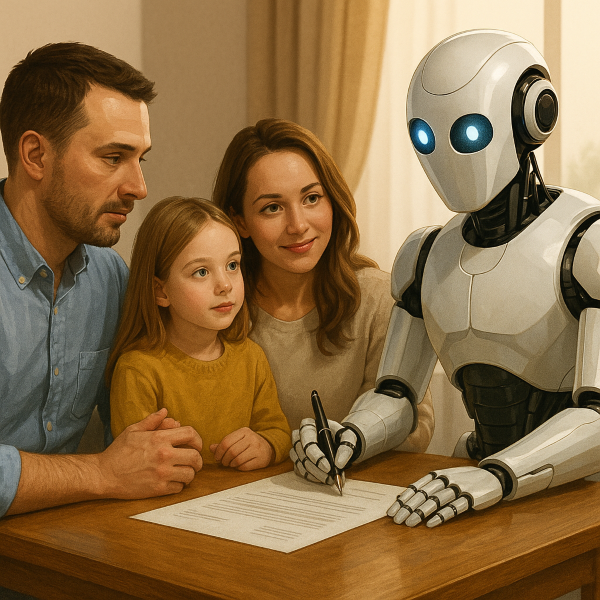
Human Jobs Matter! AI and the Future of Human Work
Back in 2013, Carl Benedikt Frey and Michael Osborne at Oxford published a landmark study predicting that 47% of US jobs were at risk of automation within 20 years. Their research made waves worldwide, echoing earlier forecasts from Cambridge and MIT that suggested many white-collar professions could be replaced by machines. Suddenly, clerks, paralegals, drivers, and even teachers were labelled as “at risk.”
Ten years on, how accurate was that prediction? The reality is more nuanced. There is no doubt that AI is transforming the way in which we work, but rather than replacing entire professions, it has reshaped specific tasks within them. AI does still have it’s limitations, and our human brains calculate far more given our wisdom, experience and specialist knowledge of the tasks we carry out.
What the Research Shows Now
Recent studies, including the Generative AI Susceptibility Index (GAISI), confirm that nearly every job has some exposure to AI. But only a fraction are heavily automatable. The truth is that AI has become a powerful co-pilot: speeding up analysis, drafting routine content, and automating repetitive tasks. Humans remain essential for anything involving judgment, creativity, and empathy.
So, while Frey & Osborne were right to highlight the risks, the reality has been slower, more uneven, and more hybrid than their bold 2013 headline suggested.
Who’s Really at Risk?
The next decade will continue to erode jobs that are highly repetitive or rule-based, including:
- Data entry and transcription roles
- Routine customer service and call centre jobs
- Basic bookkeeping and compliance monitoring
- Standardised translation and low-level copywriting
- Document-heavy legal assistant and paralegal tasks
These roles won’t vanish overnight, but their most routine aspects are already being absorbed by AI systems.
Who’s Likely Safe?
Roles that involve deep human interaction, trust, and creativity are far more resilient:
- Therapists, social workers, and carers
- Estate planners, financial advisers, and family solicitors
- Skilled trades like plumbers and electricians (work in unpredictable environments)
- Leaders, negotiators, and diplomats
- Creatives producing art, design, and original ideas
Humans excel where context, imagination, and empathy are required. These skills remain beyond the reach of algorithms.
Why Estate Planners Still Matter
AI can draft a document, but it cannot:
- Understand family dynamics or anticipate disputes
- Reassure someone facing illness or end-of-life planning
- Ensure a will or LPA is executed correctly
- Carry regulation, accountability, or insurance
Most importantly, people want a personal connection. They don’t ask for an estate planner. They want my estate planner, someone they trust, who knows their story, their family, their business, and who will be there when it matters.
Final Thoughts
AI will not make will writers or estate planners redundant. The real threat comes from commoditised corporate services, not from machines. The future belongs to professionals who embrace AI as a tool while doubling down on the uniquely human skills of listening, advising, and protecting families.
AI can generate documents. But only people can provide peace of mind.
We are not just filling out forms or producing documents. We are your will writers, your estate planners, and your legal support when you need it most. That personal relationship is something no machine can ever replace.
📞 01492 463218
📧 admin@conwywillsandtrusts.co.uk
🌐 www.conwywillsandtrusts.co.uk
#AI #EstatePlanning #FutureOfWork #ConwyWills #FreyOsborne #GAISI