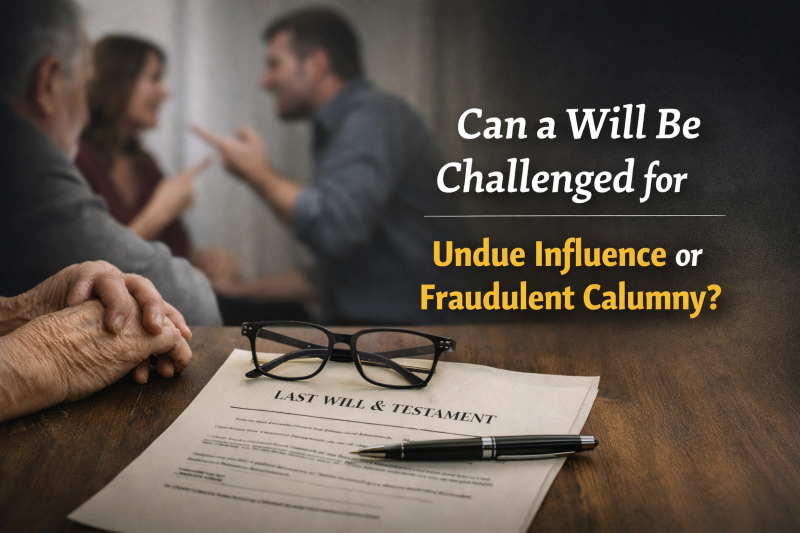
Can a Will Be Challenged for Undue Influence or Fraudulent Calumny?
When someone makes a Will, the law expects that decision to be made freely.
In plain English, a person should be able to decide who inherits their estate without being pressured, manipulated, or misled. Unfortunately, that is not always what happens.
Two of the most serious issues that can arise when a Will is challenged are undue influence and fraudulent calumny. They are difficult to prove, often deeply personal, and usually surface after the testator has died, which is when the trouble really starts.
If you are concerned that a loved one may have been pressured into changing their Will, or persuaded to exclude someone unfairly, it is important to understand the difference.
What is undue influence in a Will?
Undue influence in relation to a Will happens when pressure is applied to the testator so strongly that it overcomes their free choice.
This is not the same as a family disagreement, emotional upset, or someone being persuasive. Families argue. People fall out. Relatives have opinions. None of that automatically makes a Will invalid.
For undue influence to apply, the pressure must go beyond persuasion and become coercion. The testator is no longer making a truly independent decision, but is instead giving in because they feel unable to resist.
This can happen through:
- threats or intimidation
- relentless pressure over time
- emotional manipulation
- isolation from other relatives or friends
- dependency on one particular person
- being worn down for the sake of a quiet life
It is not always dramatic. Sometimes it is a slow and steady process rather than one explosive event.
Is undue influence hard to prove?
Yes. Very hard.
There is no automatic presumption of undue influence in probate disputes. The person alleging it has to prove it, and that is often difficult because the person whose wishes matter most, the testator, is no longer alive to explain what happened.
The court will not simply assume undue influence because:
- the testator was elderly or vulnerable
- one child was more involved than the others
- one beneficiary had a strong personality
- the Will appears unfair
Those things may raise questions, but they are not proof on their own.
That is one reason why proper Will drafting, private meetings, and detailed attendance notes matter so much.
What is fraudulent calumny in probate?
Fraudulent calumny is a specific form of manipulation.
It happens where one person deliberately poisons the testator’s mind against another person, usually someone who would normally be expected to inherit. The aim is to make the testator reduce or remove that person’s inheritance by feeding them dishonest claims.
In simple terms, it is inheritance-driven character assassination.
For example, one relative may falsely tell the testator that another child has stolen from them, abandoned them, mistreated them, or only wants their money. If the testator believes those lies and changes their Will as a result, that may give rise to a claim of fraudulent calumny.
What has to be shown for fraudulent calumny?
A successful claim usually requires evidence that:
- false statements were made to the testator
- the person making them knew they were false, or did not care whether they were true
- those statements poisoned the testator’s mind
- the Will was changed as a result
As with undue influence, the central question is whether the testator was truly acting as a free agent.
What is the difference between undue influence and fraudulent calumny?
The two are related, but they are not identical.
Undue influence is about pressure that overcomes free will.
Fraudulent calumny is about lies or dishonest allegations that turn the testator against someone.
One is coercion. The other is deception. Both can affect the validity of a Will.
Can a Will writer spot the warning signs?
Sometimes, yes. Not always, but there are red flags that should never be ignored.
These can include:
- a relative insisting on speaking for the client
- someone refusing to leave the room
- the client appearing nervous, hesitant, or fearful
- sudden and unexplained changes from an earlier Will
- exclusion of a child or close family member without a clear reason
- explanations that sound scripted or second-hand
- instructions based heavily on what one person says about another
None of these signs automatically prove wrongdoing. But they should prompt careful questioning and proper record-keeping.
What should a Will writer do if undue influence is suspected?
The best safeguard is good practice.
That means meeting with the client privately wherever possible, asking open questions, and making sure the instructions are genuinely theirs.
A careful Will writer should:
- speak to the client alone
- build trust and reassure them about confidentiality
- explore family dynamics properly
- ask why someone is being excluded or reduced
- distinguish between the client’s own experience and someone else’s allegations
- keep clear and detailed attendance notes
- make sure those notes are Larke v Nugus compliant
This is where professional process matters. A properly drafted Will is important, but so is the evidence showing how and why those instructions were taken.
Why detailed attendance notes matter
If a Will is challenged after death, the file often becomes crucial evidence.
Good attendance notes can help show:
- who was present
- what the client said
- whether they appeared confident and independent
- why they made the decisions they did
- whether any concerns were explored at the time
Without that evidence, defending the Will can become far more difficult.
Final thoughts
If you would like to put a Will in place, update an existing one, or simply want the reassurance that your wishes are being recorded properly and independently, Conwy Wills and Trusts can help.
I offer a careful, personal service with the time and attention these conversations deserve, because getting it right now can prevent a great deal of upset later.
To speak to me about making or reviewing your Will, get in touch with Conwy Wills and Trusts.
Clear advice, careful drafting, and a personal service from Conwy Wills and Trusts.